
How to Visit Bryce Canyon National Park with Kids: 6 Family-Friendly Activities & Pacing Tips
Wondering how to visit Bryce Canyon National Park with kids? This guide covers 6 family-friendly activities—including sunrise viewpoints, Queens Garden Trail, stargazing, short hikes, Horseshoe Bend combos, and rainy-day indoor backups—plus daily pacing and altitude adjustment tips to help families manage energy levels, avoid peak crowds, and reduce altitude sickness risk.
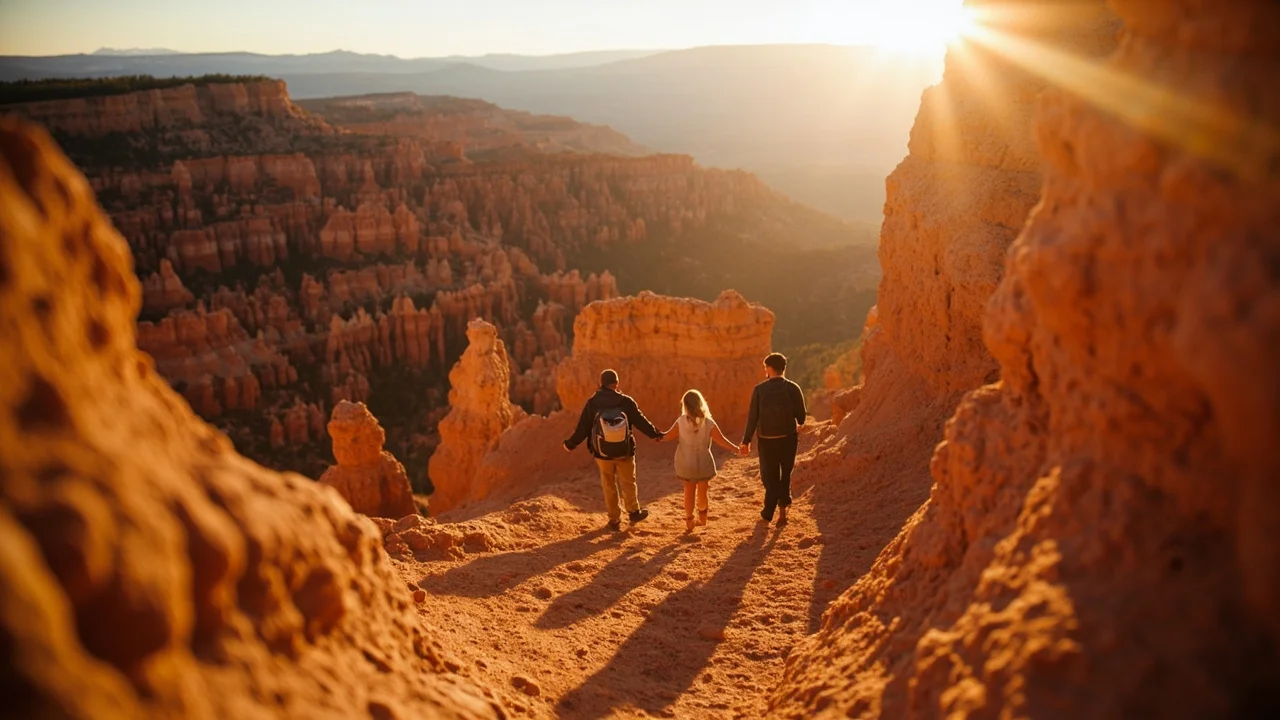
How Young Can Kids Be for Bryce Canyon National Park? How to Pace the Trip by Age?
Bryce Canyon National Park is one of the highest-elevation parks in the American Southwest—the park's visitor center sits at roughly 2,438 meters (per NPS 2024 park data). When bringing kids aged 3 to 12, the first decision isn't "how many viewpoints to hit" but how many hours to spend in the park each day. Many families place Bryce Canyon on day 4 or 5 of an American Southwest self-drive loop, arriving from Zion or Page—a half-day drive that suits younger children well.
Ages 3-5: Stick to the Rim area. The paved path from Sunset Point to Sunrise Point is about 1.6 km round trip, flat, fully railed, and easy to navigate with a stroller. Ages 6-9: Add part of Navajo Loop (about 1 km down to the Wall Street platform and back), but warn kids in advance that "downhill is easy, uphill is tough on the legs." Ages 10+: Can take on the full Queens Garden out-and-back (about 2.9 km with 170 m of cumulative elevation gain), but start within an hour after sunrise to avoid icy boardwalks.
Each age group has different stamina limits, and the number of days should match. If you cram 4 national parks into a 3-day American Southwest self-drive, kids will be visibly exhausted by Bryce Canyon; families who plan just two days and one night actually end up enjoying it more.
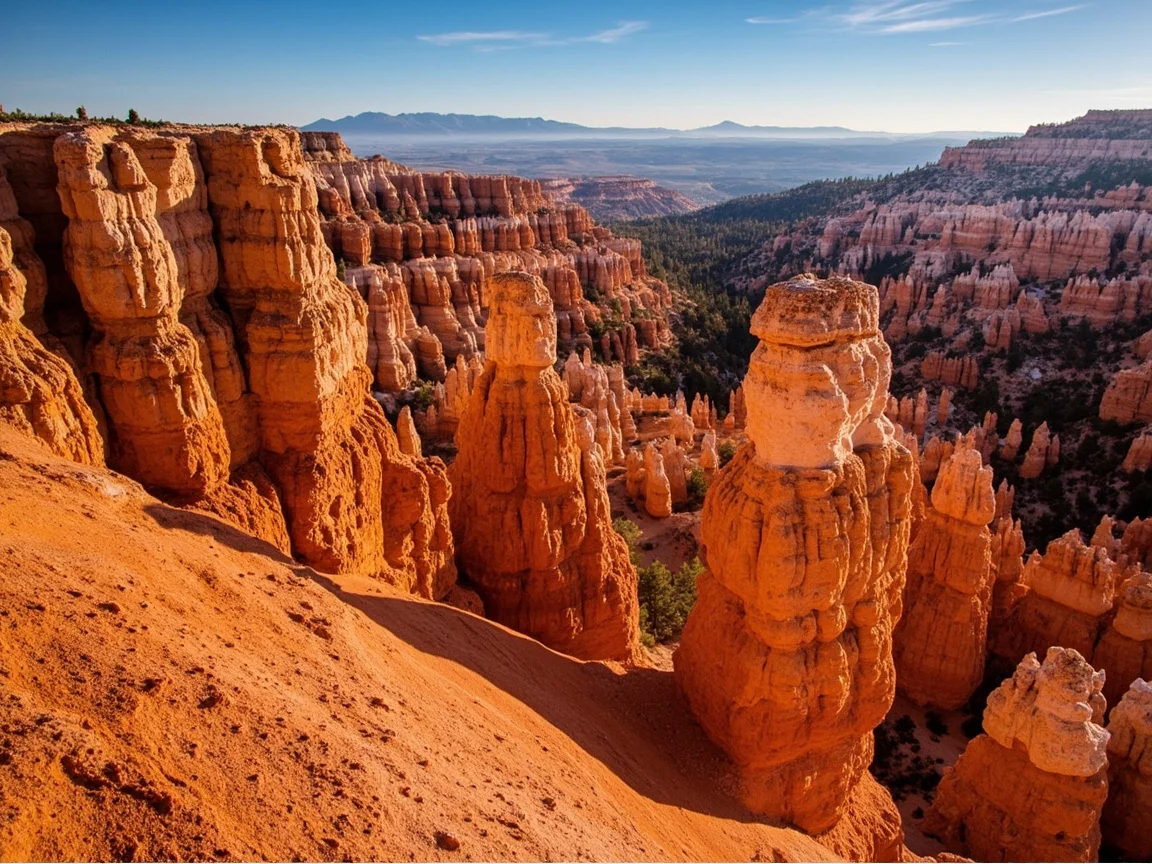
What Time Do You Need to Get Up for Sunrise with Kids at Bryce Canyon? Can You Just Enjoy the Views Without Hiking?
In any Bryce Canyon family itinerary, sunrise viewing offers the best value. Sunrise times shift by season (official 2025 Sunrise/Sunset Point data: around 5:10 AM in June, around 7:30 AM in October)—double-check on the NPS website or weather.gov before you head out to avoid a wasted pre-dawn trip.
Just look, no walk: Park at the Sunset Point lot, arrive before 7:30 AM, and walk about 200 meters along the paved viewing platform. Kids can clearly watch the Hoodoos shift from grey to orange to pink in the morning light. The whole thing takes under 30 minutes and suits children under 3 or those who don't like walking.
Light participation option: Walk the Rim Trail from Sunset Point to Sunrise Point—about 1.6 km of fully paved path with gentle grades, manageable independently by kids 6 and up. This stretch is the most classic Bryce Canyon family experience: cool morning air, fewer crowds, and fewer meltdowns.
Two pitfalls to avoid:
- Don't wake kids at 5 AM just to "catch sunrise." A 5 AM wake-up guarantees a 2-3 PM crash that ruins the rest of the day.
- Don't park at Inspiration Point and then descend—going down feels easy, but the climb back up will leave young kids sitting on the ground crying.
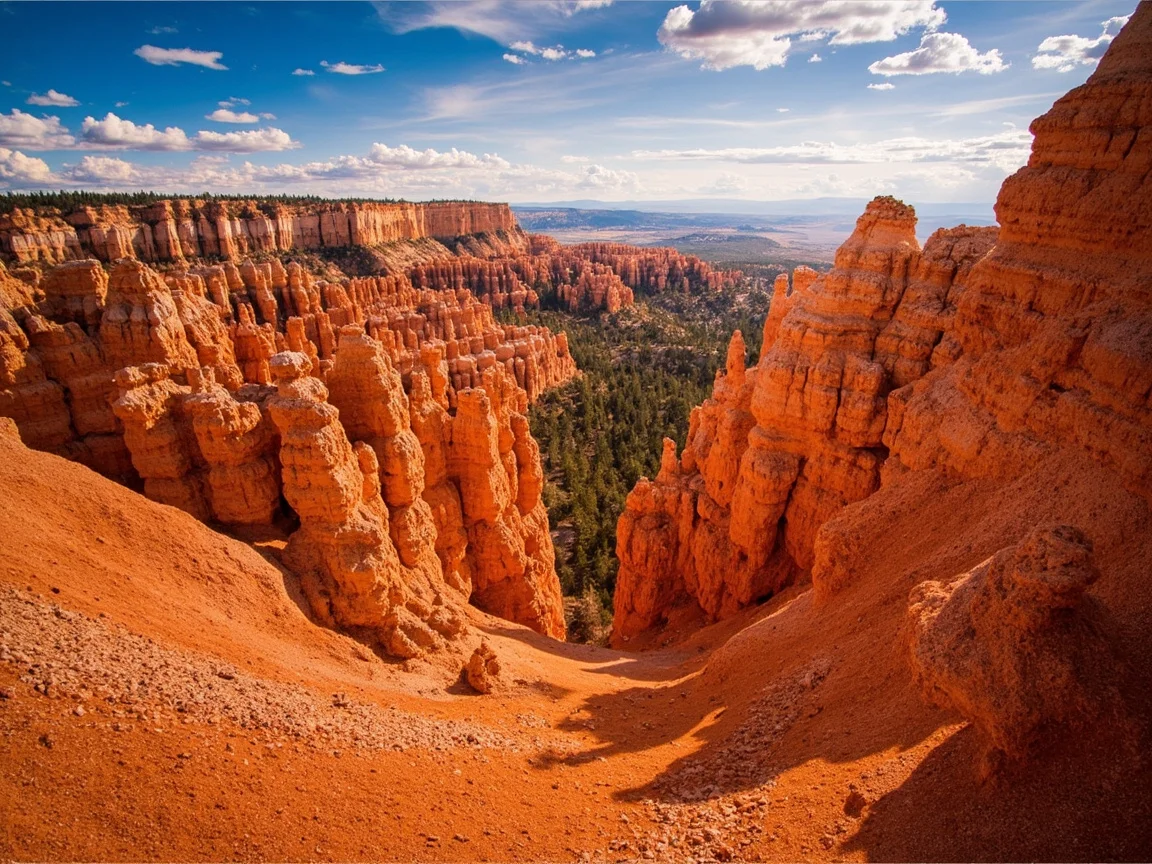
Is Queens Garden Trail Suitable for Kids at Bryce Canyon?
Queens Garden Trail is the most commonly recommended descent into the Hoodoos for Bryce Canyon family itineraries—about 1.5 km one way, 170 m of cumulative descent, roughly 2.9 km round trip. NPS officially rates it as "the easiest trail into the park amphitheater," but "easiest" doesn't mean "easy for kids."
Suitable for kids 8+ with hiking experience:
- The first 800 meters of descent are a continuous zigzag through larch forest shade, running 5-8°C cooler than the Rim—very kid-friendly in summer.
- After reaching the basin, there's an open area where kids can see Hoodoos up close and parents can grab unobstructed photos without railings.
- The challenge is the final 800 meters of continuous uphill, climbing from 1,980 m back to 2,330 m—kids' heart rates will visibly spike.
Not suitable for kids under 6:
- No railings—kids tend to wander off-trail.
- No restrooms in the basin during peak season.
- Plenty of kids end up begging to turn around halfway.
Family split strategy: One adult takes the older kids on the full Queens Garden, while another takes the younger kids on the Rim Trail and waits at Sunrise Point. The two groups reunite at the viewpoint, then drive together to Bryce Point. This kind of division is very common among families on American Southwest national park trips.
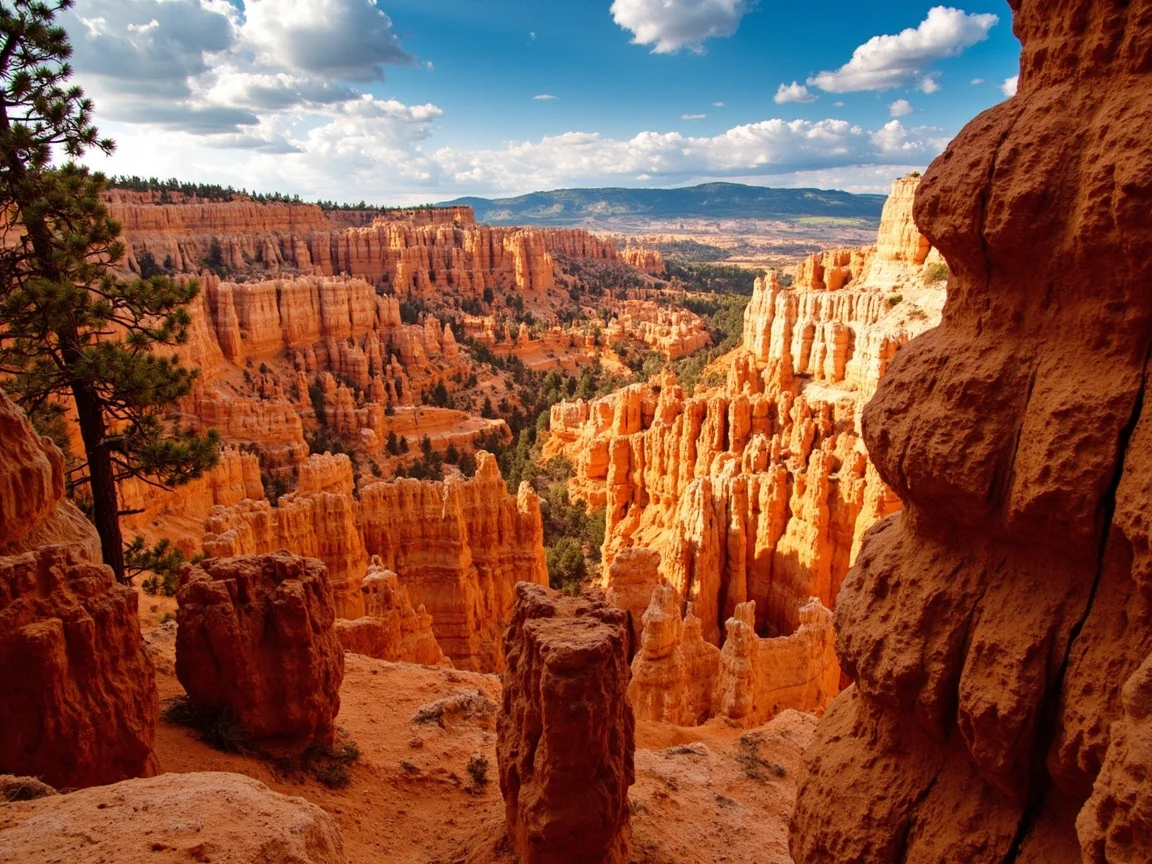
Can Kids See the Stars at Bryce Canyon? Do They Need to Stay Up Late?
Bryce Canyon is an IDA International Dark Sky Park, with some of the best stargazing in the American Southwest. You don't need to keep kids up late—the key is what time they go to bed and what time you arrive at the viewpoint.
Best timing: During peak season (June-August), the Milky Way doesn't rise until after 22:00—too late for kids. Aim for the window from the 25th to the 5th of the lunar month, when moonlight is minimal, the Milky Way is visible, and you can wrap up before 21:30.
Recommended locations: Bryce Point parking lot, Paria View parking lot, and Rainbow Point parking lot. The first two are closest by car; the last sits at the highest elevation (about 2,775 m) with the clearest skies, but temperatures drop sharply at night—pack a down jacket for the kids.
Kid-friendly simplified version:
- No professional telescope needed—the Milky Way with the naked eye combined with Hoodoo silhouettes under moonlight is already stunning.
- Bring a blanket or folding chair so kids can lie down and look up.
- 30-45 minutes at the viewpoint is enough; kids have limited attention spans and longer sessions often end in tears.
Weather and altitude reminder: Even in July, Bryce Canyon nights drop to 5-10°C at elevations above 2,400 m. Stargazing nights are not recommended for kids under 3, and adults are also prone to mild altitude sickness.
What to Do at Bryce Canyon on a Rainy Day? Indoor and Short Backup Options?
American Southwest weather is unpredictable—afternoon thunderstorms hit Bryce Canyon almost weekly in July and August, making planned Hoodoo hikes dangerously slippery. The following rainy-day backups can keep a Bryce Canyon family trip from being a total washout.
Indoor options:
- Visitor Center theater: A 22-minute park intro film every half hour—kids can sit comfortably in cushioned seats.
- Bryce Canyon Natural History Museum: Small but packed with fossils, minerals, and animal specimens that hold kids' attention for 30-45 minutes.
- Ruby's Inn restaurant and shops: Right at the park entrance, with plenty of food options—the classic rainy-day refuge.
Light rain or post-rain short options:
- Mossy Cave Trail: Located just outside the park's north entrance, about 0.8 km one way, flat, shaded, with a small waterfall—the most reliable rainy-day option.
- Bristlecone Loop: Near Rainbow Point, paved, just 1 km long, with interpretive signs about thousand-year-old bristlecone pines—rain makes the ancient pines' colors even more vivid.
What NOT to do on a rainy day:
- Don't take the Navajo Loop or Queens Garden zigzag sections—slippery surfaces plus rockfall risk.
- Don't open umbrellas for kids right at the Rim viewpoint edges—gusty mountain winds can flip umbrellas and unbalance children.
- Don't push the itinerary just because "the rain is disappointing"—thunderstorms at 2,400 m elevation feel bitterly cold and kids can quickly become hypothermic.
Pitfalls to Avoid When Taking Kids to Bryce Canyon on an American Southwest Self-Drive
This final section is a pitfall checklist for Bryce Canyon family trips, compiled from NPS on-site notices and past family visitor feedback.
Don't schedule it as your first day in the American Southwest. Flying from Las Vegas or Salt Lake City to Bryce Canyon usually takes 4-5 hours by car—kids are already worn out from the ride, and combining that with immediate hiking invites altitude sickness on top of fatigue. Spend the first night in St. George or Page, then enter the park the next morning.
Don't underestimate altitude sickness. The Rim area sits at 2,400-2,700 m—600 m higher than Zion—and kids may show stronger symptoms than adults (headache, drowsiness, loss of appetite). Avoid strenuous activity for the first two days, drink plenty of water, and consider preparing children's rhodiola supplements or electrolyte packets under a doctor's guidance.
Don't only pack summer clothes. Even in July, the temperature swing between morning and evening can reach 15°C. Shell jackets, long pants, and light sweaters are essential.
Don't park at roadside "wild viewpoints". Bryce Canyon has many unofficial pullouts along the way—no railings, no restrooms, and NPS rangers will ticket you during peak season. Always park at the official Point parking lots.
Don't skip advance reservations. Starting in 2024, popular trails in the Sunset/Sunrise/Kings Creek areas require advance reservations during peak season via Recreation.gov—family travelers especially need to plan the timing.
Don't ignore the park Shuttle. During peak season (May-October), Bryce Canyon runs a free shuttle with 7 fixed Point stops. No transfers needed with kids, no parking hassles—a seriously underappreciated perk for American Southwest self-drive families.
Frequently Asked Questions
How young can kids be for Bryce Canyon? Kids 3 and up are fine, but those under 6 should stick to the paved Rim Trail sections and avoid descending into the Hoodoo basin.
How many days should families spend at Bryce Canyon? Full American Southwest self-drive families should plan 1.5-2 days—day 1 for sunrise plus the Rim Trail, day 2 for a short basin descent or a rainy-day backup.
Bryce Canyon or Zion—which is better for younger kids? For younger kids (3-5), Zion's Pa'rus Trail (bike, walk, and stroller friendly) is the better pick. Bryce Canyon's higher elevation makes it more suitable for kids 6 and up.
Further Reading/References
- Bryce Canyon National Park - Wikipedia
- Official Bryce Canyon park info and trail conditions - National Park Service
- Bryce Canyon family activity recommendations - Utah Office of Tourism
- Bryce Canyon family attractions and hotel ratings - Lonely Planet
Taking kids to Bryce Canyon doesn't mean chasing how many viewpoints you can check off. One fewer meltdown and one more smile at 2,400 m elevation is worth more than three extra overlooks—slow the pace down and leave the rest to the sunshine.
Related articles
8 Overlooked Details for Myrtle Beach Trips: Pre-Departure, On-Trip, Accommodation & Money-Saving Guide
8 details most easily overlooked before traveling to Myrtle Beach, all explained at once: from visa document checklist, B1B2 application process and processing time, to consulate selection, expedited service differences, plus validity and stay period interpretation. Breaking down refusal reasons around real scenarios, paired with accommodation savings and pre-trip pitfall tips, so your U.S. beach trip gets off to a smooth start.
Mount Rainier National Park vs Similar Destinations: Pros & Cons of 3 Popular Alternatives and a Selection Guide
How do you choose the best value at Mount Rainier National Park? This article compares 3 popular similar destinations, breaking down landscape highlights, best seasons, lodging and dining, self-drive routes, ticket costs, and pitfalls—so you can quickly decide whether Mount Rainier National Park fits your itinerary, along with clear alternatives and a decision checklist.
Best Time to Visit Nashville for Music: A Food Map of 7 Must-Try Local Dishes and Hidden Street Flavors
Centered on the best time to visit Nashville for music theme, this guide maps out 7 must-eat local dishes and 5 hidden street-side gems—covering hot chicken, BBQ, Southern brunch, and late-night food maps. Content is organized around spring, summer, fall, and winter seasonal pairings, with recommended dining times, neighborhood suggestions, and queue-avoidance tips—travelers can plug it straight into their itinerary and fully savor Tennessee flavors.
Redwood National Park Travel Guide: 2026 Must-Visit Attractions, Routes & Practical Tips
Our Redwood National Park travel guide covers the latest 2026 tips, must-include must-visit attractions, best months to travel, itinerary planning, and budget. Featuring in-depth routes, self-drive tips, and seasonal advice to help you avoid crowds and plan efficiently. Whether hiking among giant sequoias or taking in coastline views, you'll find an itinerary and practical advice that fits.
A professional and thoughtful travel assistant website, dedicated to building a one-stop platform for trip planning and destination exploration. The platform brings together a wealth of high-quality travel resources, delivering diverse itinerary inspiration covering niche domestic getaways and popular overseas destinations. It also offers detailed and practical travel guides, including dining and accommodation recommendations, transportation tips, and pitfall avoidance advice, along with smart travel tools that customize suggestions based on trip duration, budget, and preferences, simplifying the complex preparation process and making every trip stress-free and full of new experiences.
View all articles →