
Texas BBQ Trail vs Alternatives: Pros, Cons, and a Guide to Choosing Among 3 Popular Options
=== EXCERPT === Texas BBQ Trail is ideal for users focused on discovering BBQ restaurants and planning routes, but competing tools offer advantages in offline maps, AI itinerary generation, subscription costs, and privacy. This guide compares 3 popular options and provides selection advice and a pitfall checklist based on features, budget, network conditions, and travel scenarios.

Texas BBQ Trail Comparison: How Do You Choose Among 3 Popular Tools?
When you first open Texas BBQ Trail, do you care more about locating BBQ restaurants offline, or would you rather have AI generate an actionable road trip route? Travel by car across Texas is often described as “long distances and many choices,” but the tool you use can determine the experience. Some excel at discovering barbecue restaurants, others prioritize offline maps, and others win on low subscription costs. This article compares 3 popular alternatives across app features, offline capabilities, AI itinerary assistants, subscription prices, privacy, and popular use cases.
According to 2025 data from the National Park Service, Texas has more than 20 national parks and protected areas, and road trips between cities are a common way to travel. Texas BBQ Trail’s core value is combining restaurant discovery and route planning in a single mobile tool. Choosing the right tool can make food-focused road trip planning easier.
Which Texas BBQ Trail Option to Choose: Start with Restaurant Discovery and Route Planning
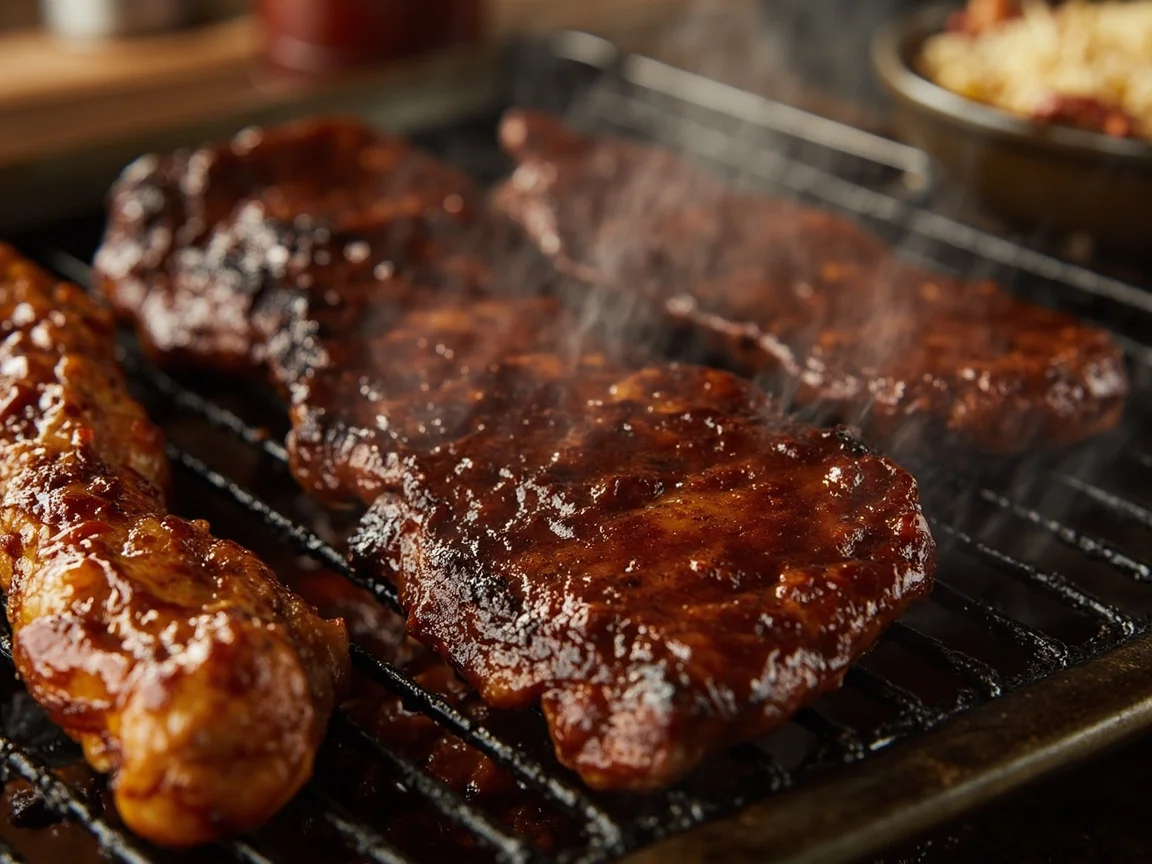
Texas BBQ Trail is best for users who want to solve two specific problems: finding BBQ restaurants with a distinctive style and linking those restaurants into a route. It generally emphasizes restaurant information browsing, saving favorites, and organizing routes, making it suitable for in-depth tours of America, festival gatherings, or users who need to find a restaurant while traveling.
But choosing between options requires more than comparing restaurant counts. First, check whether the app provides opening hours, addresses, map links, and closure notices. Second, confirm whether route planning supports multiple stops. Third, check whether you can add restaurants manually. Even when an itinerary is generated entirely by AI, you still need to verify the navigation results.
If you want the Texas BBQ Trail comparison to highlight the core differences, the most practical approach is to test every option using the same set of restaurants. For example, plan two stops each in Austin, Dallas, and Houston, then record how long it takes to find each restaurant, whether reordering is intuitive, and whether the route avoids unnecessary backtracking. This reveals the real experience better than comparing interface screenshots alone.
The 3 popular alternatives can be summarized as follows: one focuses on BBQ-specific discovery, another emphasizes general travel planning, and the third prioritizes offline maps and route tools. Choose based on your own itinerary rather than assuming the app with the most restaurants works best for everyone.

Offline Travel App Comparison: Choosing for Mountains, Rural Areas, and Dead Zones
Do you frequently visit rural Texas, state parks, or remote small towns? Offline travel app capabilities may be the deciding factor. Texas BBQ Trail’s offline value primarily depends on whether saved restaurants, map areas, and itinerary materials remain accessible in weak-network environments. However, “offline support” does not mean that all content is fully cached, so you should verify it before departure.
An offline test can be divided into three levels. First, disconnect the network and check saved restaurants. Next, verify whether downloaded maps can be zoomed and whether your location can be identified. Finally, try organizing the next day’s route without a signal. If addresses can only be accessed online, the tool becomes less reliable when your phone dies or signal is weak in mountainous areas.
Among the other three popular options, general mapping tools usually provide more complete road hierarchies, road names, and route guidance. Specialized BBQ tools focus more on restaurant tags and characteristics. Itinerary-planning apps may excel at scheduling, but their map details are not necessarily as thorough. For users primarily taking a self-guided tour of America and frequently crossing multiple cities, the best solution combines general-purpose capabilities with specialized content.
Also check how offline maps are updated, how much storage they use, and which regions are available for download. Before leaving, prepare at least one paper or screenshot copy of addresses and reservation details. Do not rely entirely on a single app to keep your entire itinerary safe.
AI Itinerary Assistant Comparison: Can Automatically Generated Routes Be Used as Is?
If you want to enter “two days, suitable for a family, with elderly relatives, and a desire to experience different BBQ styles” and receive a complete itinerary within minutes, an AI itinerary assistant can be appealing. The level of manual control over Texas BBQ Trail and the other options is the most important factor to compare in this area.
AI’s advantage is speed. It can quickly provide dining, lodging, and transportation suggestions and adjust routes. Its limitations are that business information may be outdated, and its recommendations may favor popular restaurants. Automatically generated food road trip plans should not be followed blindly, especially when routes depend on reservation times, seasonal availability, or vehicle travel times.
When comparing tools, use the same set of constraints each time: group size, departure point, destination, daily driving limit, dining preferences, and lodging area. If AI only provides a “rough route” while ignoring an elderly relative’s midday rest, children’s dining needs, or queues at multiple restaurants, it is more of an inspiration generator than a mature planning tool.
During popular holidays, tools are more likely to recommend the same famous restaurants. Checking restaurant websites, map listings, and recent reviews is more effective than repeatedly revising prompts. Always verify opening hours, reservation requirements, travel times, and parking information for AI-generated itineraries.
Subscription Prices and Privacy: Is the Free Version Enough, and How Is Your Data Used?
Whether the free version is sufficient depends on whether you frequently travel between cities, save many restaurants, and use AI features. In a Texas BBQ Trail comparison, subscription prices should not be judged by the monthly fee alone. Consider trial length, annual plans, whether offline features require payment, and whether AI usage is billed separately.
Some tools offer basic maps and restaurant browsing in exchange for registration, while others include a complete offline package as a subscription benefit. For a single short trip, a temporary purchase may not be worthwhile. If you make several Texas road trips each year, an annual plan may offer better value. List your frequently used features and compare them with the pricing page before choosing, so you do not pay long-term for cloud itinerary features you rarely use.
For privacy, review permission requests, account information collection, how location data is used, and third-party analytics terms. Users who frequently rely on precise location features should favor apps with clear permission explanations, options to disable personalized recommendations, or meaningful manual controls. If a tool claims it “does not sell personal information,” distinguish that claim from whether it shares anonymous usage data.
Do not leave a family member’s real-time location with a single service indefinitely. Avoid signing into accounts containing sensitive booking information over public Wi-Fi. Revoke authorization and delete accounts for services you no longer use to reduce future risks.

Use Cases for the 3 Popular Options: Decide Based on Your Actual Travel Needs
Scenario 1: First visit to Texas with little time for research.
Prioritize options with clear restaurant information and strong filtering. Texas BBQ Trail is better for combining destinations around a BBQ theme than covering every attraction in one trip. General travel tools can supplement information about lodging and transportation, but require more time filtering restaurants.
Scenario 2: Cross-city road trip with an unreliable signal.
Focus on offline maps, saved places, and paper backups. Specialized food tools may offer stronger dining content, while general mapping tools are usually better for long-distance driving. Ideally, use both.
Scenario 3: Traveling with elderly relatives or children, or strictly limiting daily driving time.
Prioritize an AI itinerary assistant that allows manual adjustments and driving-time limits. Reject automatic plans that schedule more than 6 hours of daily driving, ignore midday rests, or require frequent hotel changes.
Scenario 4: Limited budget for a single short route.
Start with the free version and confirm whether saving, routing, and offline features are sufficient. When traveling with others, check device limits as well, so you do not reach the meeting point and discover that only the primary account can view the full itinerary.
Frequently Asked Questions
Is Texas BBQ Trail or a general mapping app better?
Choose Texas BBQ Trail for a focused search for BBQ restaurants. General mapping apps are usually more comprehensive for road navigation, cross-city transportation, and diverse places, making a combination the safer option.
Does Texas BBQ Trail support completely offline use?
The content available offline depends on the version and network caching mechanism. Before departure, test whether saved restaurants, maps, and route information can be accessed offline.
Can you follow an AI-generated Texas BBQ itinerary directly?
It is not recommended. Verify opening hours, reservations, actual travel times, parking, and recent reviews, especially during popular holidays.
Pitfall Checklist: 5 Checks to Complete Before Choosing a Tool
-
Make a decision based only on the free version. First list your must-have features, then check whether subscriptions include offline maps, AI generation, exports, and multi-device synchronization. This prevents discovering after purchase that essential features cost extra.
-
Mistake “available online” for “available offline.” Open saved restaurants in airplane mode and try zooming the map and viewing addresses. A paper backup remains essential for remote rural areas, in-depth tours, or seasonal trips.
-
Trust the AI itinerary assistant completely. Verify opening hours, reservations, parking, routes, and reviews for every stop. Check restaurant information directly when holidays, limited availability, or same-day schedule changes are involved.
-
Ignore location permissions and privacy settings. Grant only the permissions required for routing, disable unnecessary continuous location tracking and personalized recommendations, and sign out of sensitive accounts after using a shared device.
-
Buy a subscription before verifying compatibility. Check your phone’s operating system, available storage, offline download capacity, and device-number limits. The safer approach is to complete a short trial, then test the core features with a real restaurant route.
Users who often attend food gatherings should also check cancellation policies, queue procedures, and reservation requirements. For trips that include lodging, verify that the route’s endpoint does not conflict with the hotel’s check-in area. Tools can improve efficiency, but they cannot replace information checks before departure.
Further Reading and References
- Overview of Texas and its cities
- National Park Service information on Texas parks
- Travel Texas official tourism guide
- Lonely Planet Texas travel resources
A note to readers: Identify the problem you are most concerned about before choosing a tool. Choose Texas BBQ Trail if you frequently look for BBQ restaurants, add a general mapping tool if you often travel between cities, try the free version if budget is your priority, and review each permission if privacy is a concern.
Related articles
best time to visit maui with kids: Where to Stay Conveniently — 4 Accommodation Areas and Price Ranges
Looking for a convenient place to stay when visiting Maui with kids? This guide compares Wailea, Kaanapali, Lahaina, and Kihei, covering transportation, family-friendly facilities, ideal travel scenarios, price ranges, and common pitfalls to help you choose the right stay for your budget and itinerary.

Things to Do in Phoenix This Weekend for Adults: 7 Local Must-Eats and Hidden Street Food Gems
A food map for things to do in Phoenix this weekend for adults, featuring 7 local must-eats and hidden street food spots, from classic Mexican dishes to desert-inspired flavors and destinations worth a special trip. This app-focused review compares food map apps, offline restaurant finding, subscription pricing, AI assistants, and privacy, plus provides restaurant picks and common pitfalls for an adults-only weekend itinerary.

things to do in austin texas food map: 7 local must-eats and hidden street flavors
The things to do in austin texas food map focuses on 7 local must-eats and hidden street-food gems, with location details, ordering recommendations, ideal occasions, and common spending pitfalls. It is both a practical Austin food review and an easy-to-follow city tasting list, helping you avoid disappointing influencer-favored restaurants and find the local favorites people genuinely return to.

How to Enjoy Louisiana Bayou with Kids: 6 Family-Friendly Activities and Pace Tips
A family trip to Louisiana Bayou is about more than taking a sightseeing boat ride; it requires careful planning for safety, flexible routes, and the right gear. This article evaluates travel tools for offline maps, subscription costs, AI assistants, privacy, and family use, then offers six activities for children of different ages, daily pacing ideas, and common pitfalls to avoid.
A professional and thoughtful travel assistant website, dedicated to building a one-stop platform for trip planning and destination exploration. The platform brings together a wealth of high-quality travel resources, delivering diverse itinerary inspiration covering niche domestic getaways and popular overseas destinations. It also offers detailed and practical travel guides, including dining and accommodation recommendations, transportation tips, and pitfall avoidance advice, along with smart travel tools that customize suggestions based on trip duration, budget, and preferences, simplifying the complex preparation process and making every trip stress-free and full of new experiences.
View all articles →